
An Interdisciplinary Journey: From Urban Farming to Revitalizing the Neighborhood Life Cycle
For many, Innotex is a renowned hub for startups, business, and innovation. However, the presence of an experience rooted in architecture, urban studies, and sociology in such a setting offers a unique opportunity for interdisciplinary dialogue.
The story of Bam-e Sabz (Green Roof) of Siroos is a narrative of an interdisciplinary, field-tested model for community empowerment through urban agriculture. It is a story of how residents participate in social entrepreneurship, revive local economic cycles, and create spatial value within homes that are often viewed merely as “urban problems,” but can, in fact, be part of the solution for improving urban quality of life.
Started about eight years ago in the Siroos neighborhood of Tehran, Bam-e Sabz began as a simple urban farming project. Over time, it evolved into something much greater: an effort to shape a local cycle where people, production, business, education, social participation, and the spatial capacities of the neighborhood are all interconnected.
Its presence at Innotex 2026 is an opportunity to introduce an experience tested in one of Tehran’s historic neighborhoods to a broader discourse of innovation and social business.
.jpg)
It All Began in Siroos
Siroos is one of the five neighborhoods of the Safavi Enclosure in Tehran. Over the years, it has suffered significant damage due to administrative policies, demolition, and the pressures of modernization and construction. Historically, Siroos has faced weaker social and economic foundations compared to many other historic districts in Tehran, often leading to less developmental attention.
Yet, in the heart of these challenges, grassroots movements have emerged to breathe life back into the neighborhood. Women, children, teenagers, and dedicated residents form the core of this movement. Bam-e Sabz was born within this context—not as a standalone project, but as a way to test a vital question: Can we utilize the existing capacities of a neighborhood to build a sustainable social and economic cycle?
Urban Agriculture: From an Idea to a Sustainable Experience
Urban agriculture is not a new concept in Iran. For over a decade, discussions regarding the use of urban spaces for plant production and education have existed. Various examples have emerged in parks and community gardens, such as Shahrbano or Shahrdokht. However, many of these experiences have become underutilized or abandoned due to the lack of a sustainable social and economic cycle.
This is where the Bam-e Sabz of Siroos makes its mark. Here, urban agriculture is not the end goal; it is a tool for fostering participation, learning, production, entrepreneurship, and strengthening the local economy. While production and sales mark the beginning, the core objective is the formation of connections and the creation of a sense of belonging. By linking production with the social life of the neighborhood, the project has secured its continuity.
When Local Activities Converge
One of the most significant features of this experience is the network formed over time between diverse groups: residents, women, children, urban management, universities, specialists, and heritage conservationists.
A key milestone was when the municipality provided a derelict property to the project, which led to the creation of a greenhouse and a community gathering space for local women. This space provided a unique opportunity for women—who may face cultural barriers in using public spaces—to participate actively. Simultaneously, the involvement of academics and the “Children’s Council” has prioritized the education of the next generation.
In this ecosystem, every activity feeds into another:
Identifying local capacities →\rightarrow Establishing connections →\rightarrow Building a cycle of people, production, business, and social participation.
When the Homes Become Part of the Cycle
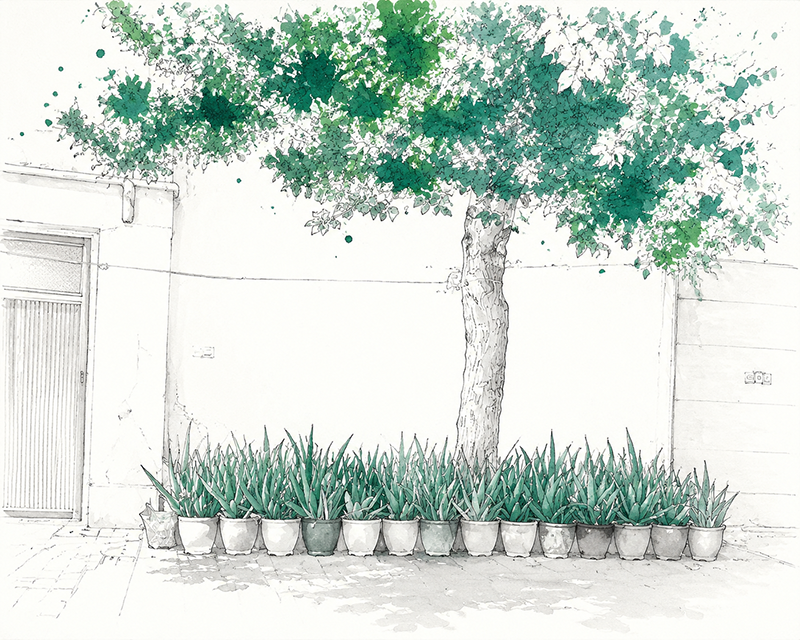
A profound and often overlooked aspect of this project is the integration of residents’ homes into the cycle. Potted plants and greenery are maintained within private homes, meaning production is no longer confined to a single greenhouse; it permeates the very fabric of the neighborhood.
From an architectural and urban planning perspective, this is significant. Homes that are often viewed as “problems” due to their dilapidated state are being repurposed to create added value. Instead of seeing old houses merely as subjects for demolition or reconstruction, this approach views them as essential components of the solution for improving life quality and revitalizing the district.
From a Project to a Social Network
Bam-e Sabz has strived to transcend being a mere project. If the goal were only production, the greenhouse would have been the finish line. Instead, what has emerged is a social network.
This experience demonstrates how specific activities can be used to build a wider neighborhood cycle, where residents are not just “audience members” of a program, but active architects of the process. This is where concepts like “community empowerment,” “supporting micro-local businesses,” and “community participation” move from policy documents into real-world practice.
Siroos: A Neighborhood Still Fighting for Life
Siroos continues to face the pressures of demolition and redevelopment. Bam-e Sabz cannot be viewed in isolation from the fate of the neighborhood. It serves as a reminder that urban revitalization is not just about changing the physical fabric; it is about fostering local economies, social presence, and a sense of belonging.
The question is no longer: “Can we build another Green Roof?”
The question is: “Can we apply the logic of this experience to other neighborhoods?”
We cannot simply replicate the “Siroos model” because every neighborhood has unique social and spatial characteristics. What can be replicated is the methodology: identifying local capacities, connecting people with space and production, and creating a self-sustaining cycle.
Innotex: A Gateway for Shared Experiences
The presence of Bam-e Sabz at Innotex 2026 is an invitation. It is an opportunity for an experience rooted in urban history to engage with the worlds of innovation and social entrepreneurship.
.jpg)
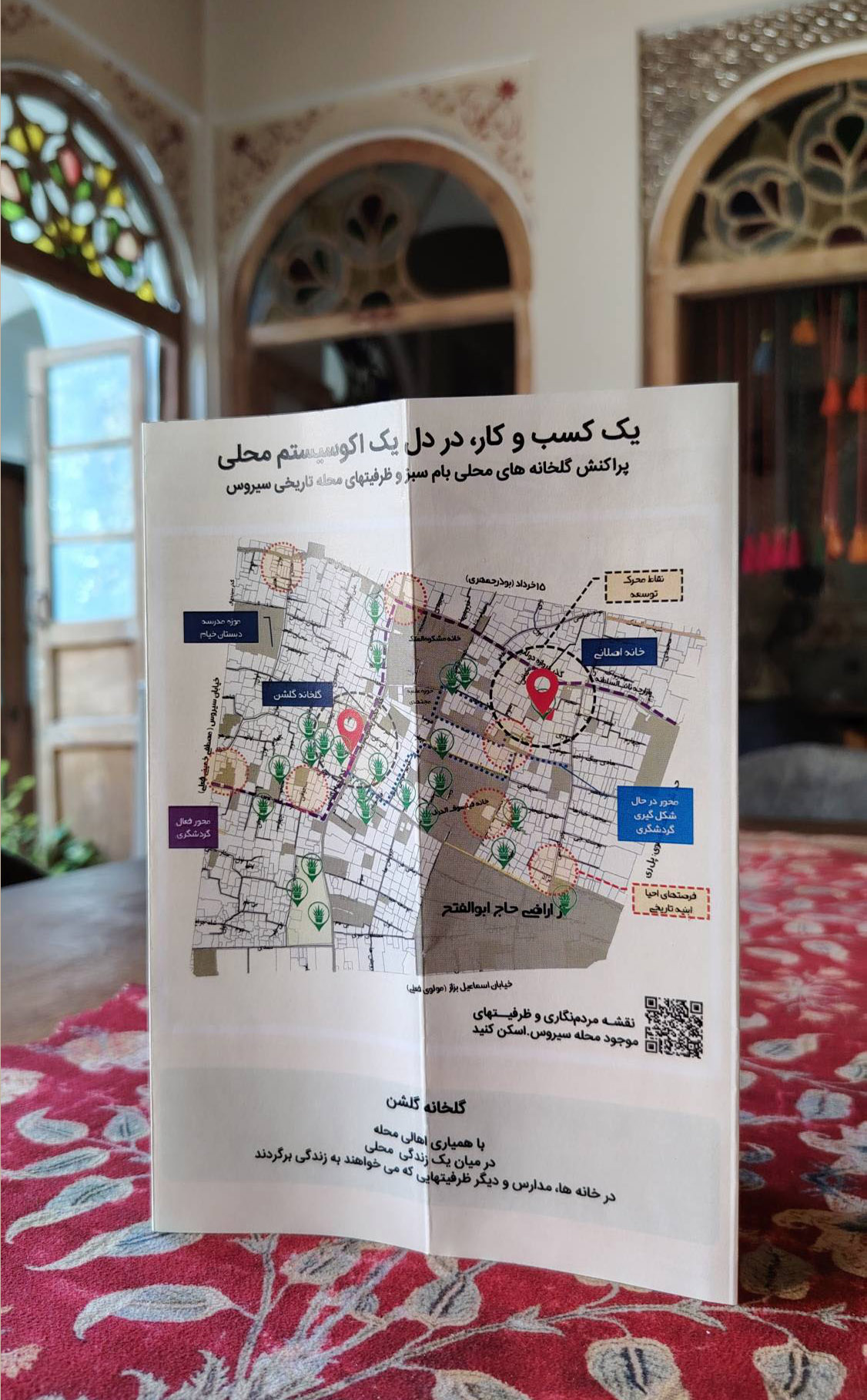
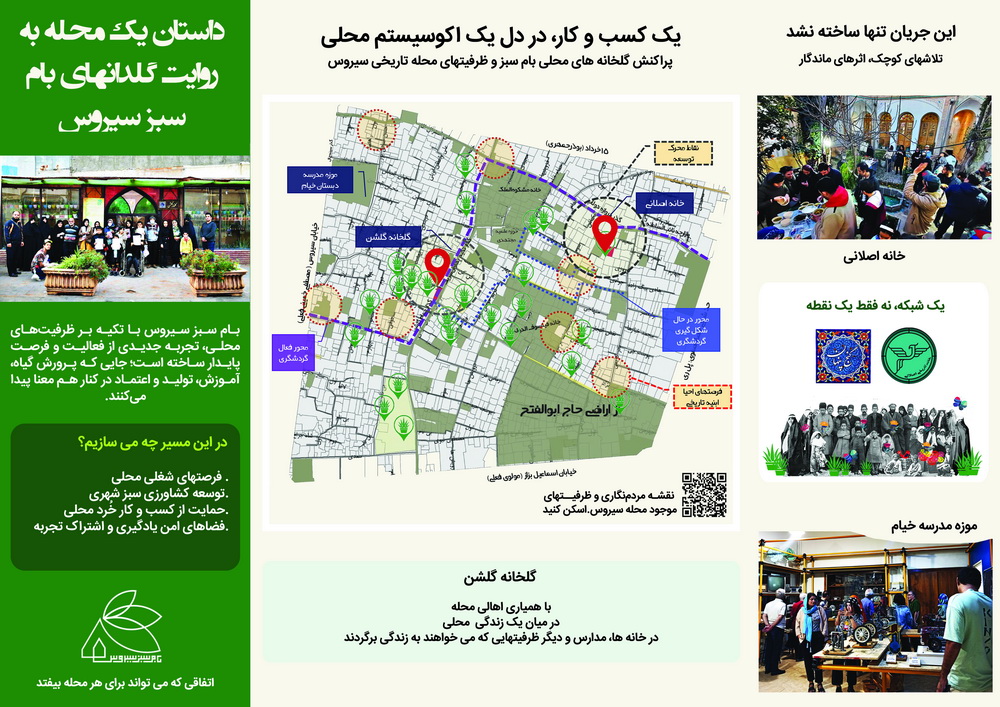
The Bam-e Sabz Brochure is designed as a map of this network. It presents the structure, functions, and outputs of the project, the network of supporters, and a map of Siroos’s diverse capacities—ranging from historical layers to sustainable development pathways and investment opportunities in the historic fabric.
Innotex is a reason to introduce this experience, but more importantly, it is a sincere invitation to visit Siroos, experience it firsthand, and contemplate how we can restore the cycles of life, economy, and participation to our historic urban hearts.
💬 User comments
📝 Add new comment