Alireza Mehyari
The film “The Old Son” (Pir Pesar) is currently screening and has generated both strong support and criticism. This polarized reception in itself demonstrates how the production and public exhibition of serious films and new cinematic experiments can stimulate public discourse—an undeniably positive sign.
That said, the aim of this note is not to analyze the film’s narrative structure or cinematic language.
The House as the Central Conflict
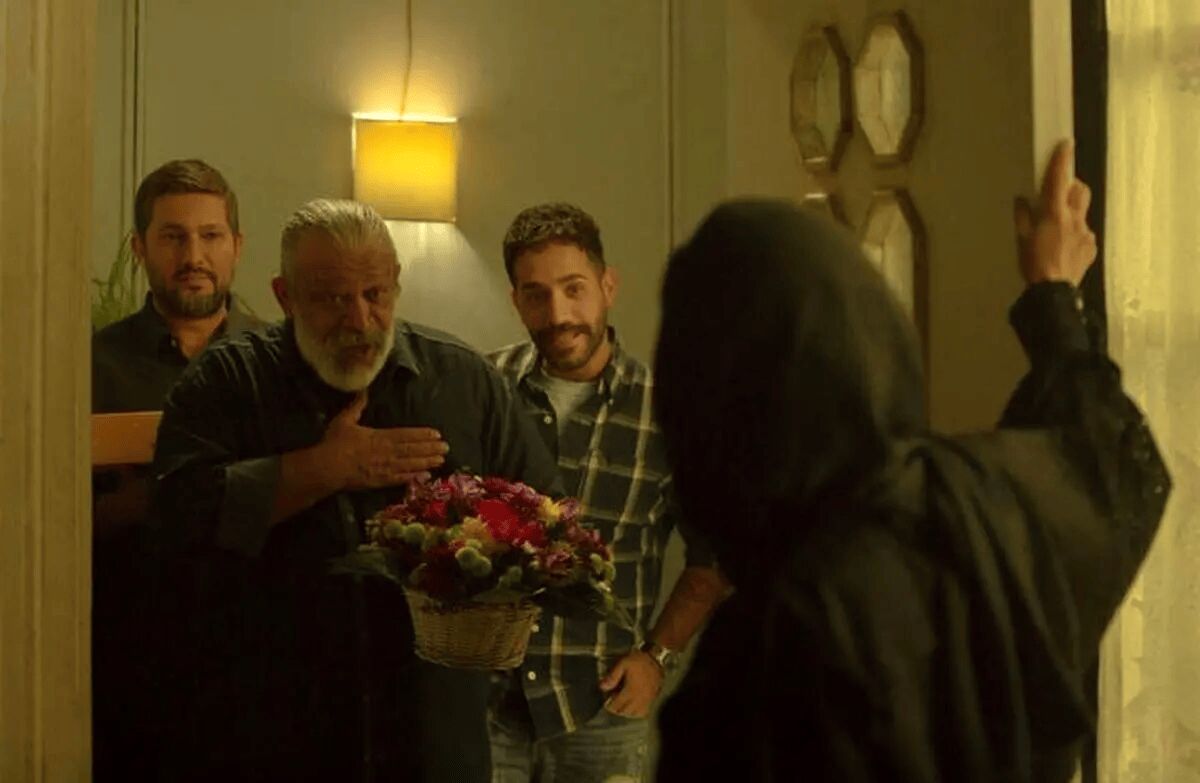
The house that becomes the focal point of conflict between the father and his sons in the film is a villa dating back to the late Pahlavi II period, most likely built in the 1970s (1350s SH). Based on the depiction of both interior and exterior spaces, it belongs to a category of houses that were widely constructed during that decade.
Following the 1979 Revolution, many such houses were confiscated under various pretexts. Since the original owners were often unable to return to Iran, these properties changed hands repeatedly—almost like war spoils—among those involved in the confiscation process. Typically, these houses belonged to the upper-middle class or government officials, and as a result, they often display a relatively high quality of architectural design and construction.
It is not entirely clear to the author whether the exterior shots of the house—particularly the courtyard—correspond precisely with the interior scenes. For the purpose of this text, however, it is assumed that the interior and exterior spaces are spatially consistent.

Pahlavi-Era Villas and the Logic of Demolition
Villa houses developed extensively in Districts 1, 3, 6, and 7 of Tehran during the rapid and largely unregulated urban expansion of the late Pahlavi era. Today, these buildings represent lucrative opportunities for demolition and redevelopment in relatively desirable neighborhoods of Tehran.
As the film subtly reflects, the economic potential of these properties often becomes a source of tension and conflict—both in cinematic narratives and in real urban life.
But why can these villas no longer easily function as residential homes?
The primary challenge lies in their large floor area, especially at a time when household sizes have significantly decreased compared to previous decades—and continue to shrink. Another major issue is the need for extensive interior renovations and the upgrading of outdated mechanical and electrical systems, which entails considerable costs that many owners cannot afford.
Additionally, the ongoing maintenance and upkeep of such houses presents another layer of difficulty. When combined with the substantial financial gains achievable through demolition and reconstruction, these factors have played a decisive role in the widespread destruction of such villas over the past two decades—a trend that shows no sign of slowing.
Architectural Value and Collective Memory
From the standpoint of architectural heritage, this particular house type may not qualify as a monument worthy of official registration on Iran’s National Heritage List. Indeed, countless examples have already been demolished in recent years, and the process continues.
Nevertheless, these houses are important historical witnesses. They represent a period in Tehran’s urban development when homes were designed for large families and reflect a distinct lifestyle from roughly half a century ago.
In recent years, the majority of these single-plot villas have been replaced by five- or six-story apartment buildings, often yielding more than ten residential units per lot. This transformation has played a significant role in shaping the architectural and urban form of Tehran in the new century.
Adaptive Reuse as a Path Forward
Ultimately, one of the most viable strategies for preserving this category of villa houses appears to be assigning them non-residential uses. Recreational, cultural, educational, and similar programs—uses that require generous spatial layouts and can absorb the high costs of structural and infrastructural adaptation—offer a realistic alternative to demolition.
Such uses have the potential to revive the courtyard, restore vitality to these buildings, and reintegrate them into the contemporary urban life of Tehran—thereby helping to prevent further large-scale destruction of this architectural typology.
💬 نظرات کاربران
📝 افزودن نظر جدید