
,The incineration of the Iran Cinema building on Lalehzar Street on December 14 transcends the destruction of a single physical structure; it 23 Azar 1404( 23 dec 2025) stands as a potent symbol of systemic failure in preserving modern architectural heritage and a monument to collective errors in urban governance. This event serves as a stark warning against reactive, emotional responses that supersede rational, long-term preservation strategies. The article examines the historical ,significance of Lalehzar, analyzes its distinctive Art Deco architectural footprint and contrasts the local inertia with successful global models for revitalizing historic cinemas, ultimately stressing the urgent need for viable economic and .cultural frameworks to save similar endangered assets
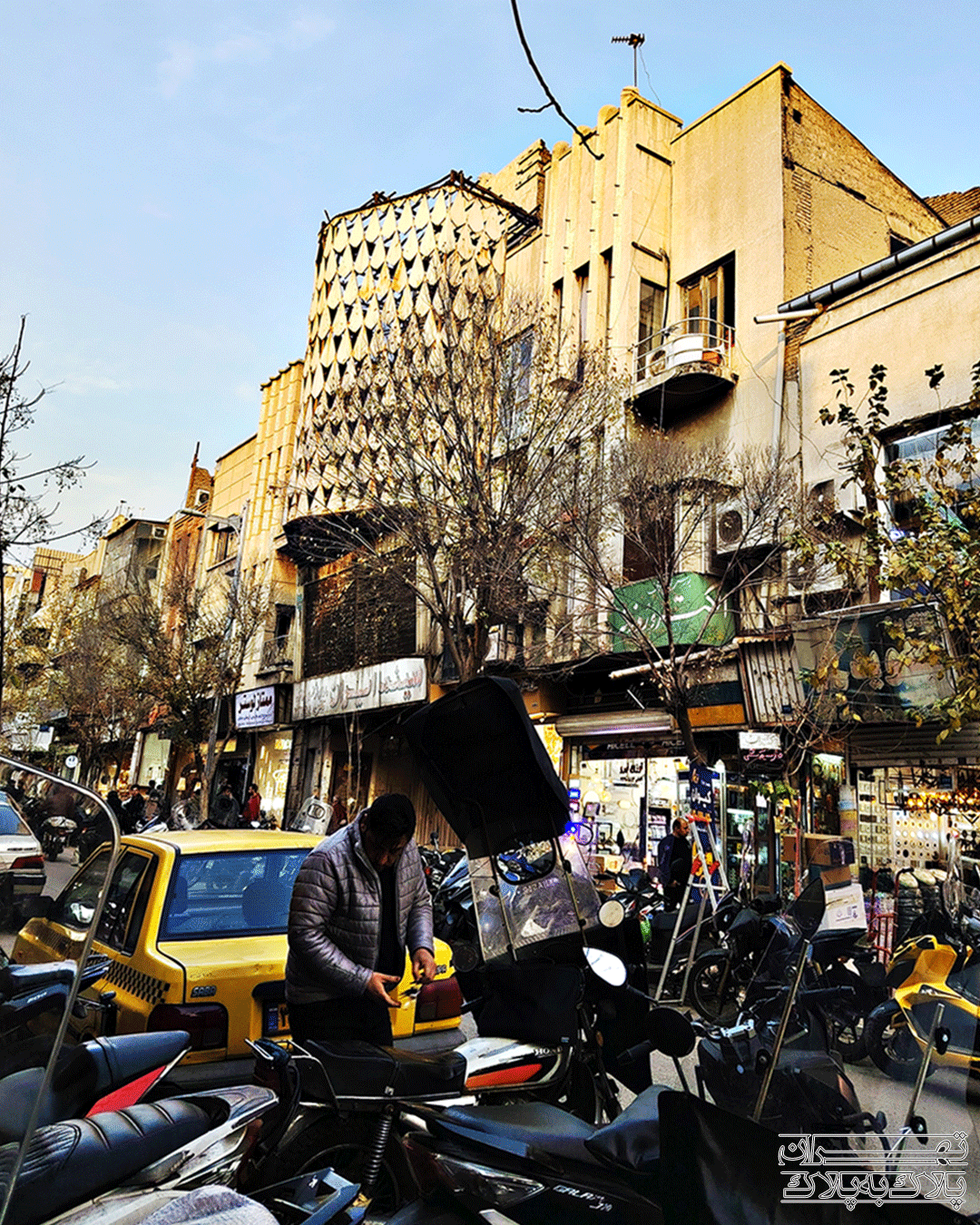
On December 15, 2025 — two days after the fire that engulfed Iran Cinema on Lalehzar Street
The Iran Cinema Fire on Lalehzar Street was more than the destruction of a single building—it reflected a broader failure to preserve modern architectural heritage and the collective errors in urban decision‑making.
The tragedy serves as a warning: emotional reactions and the absence of institutional facilitation have paved the way for the loss of cultural and historical assets.
Now, the key question arises — how can Lalehzar’s invaluable heritage be revived with reason, planning, and inspiration from global urban models?
Iran Cinema on Lalehzar Street was consumed by fire on the morning of December 23, 2025 (Azar 23, 1404). This event, which garnered extensive media coverage, elicited numerous reactions from individuals, including managerial bodies and urban activists. It sparked public speculation, ranging from arson by the owner (who was due to host a tour of Iran Cinema at the first Udlajanology Symposium, set for December 27–29, an event that might have underscored the owner's failure to renovate the property) to theories suggesting municipal intent to facilitate the building's redevelopment.
Iran Cinema holds a significant place in the collective memory of the city, even for generations who did not witness its prime. Closed by order of the Ministry of Culture and Islamic Guidance in the 1990s, the cinema has remained vividly present in the minds of citizens interested in Lalehzar’s history, thanks to its distinctive and symbolic facade on the street. Lalehzar Street itself transcends being merely an urban thoroughfare; it has played a pivotal, event-driven role throughout Tehran's history—from its garden-like nature during the Naser al-Din Shah era to its later establishment as the crucible for the capital's first cultural, artistic, and commercial experiences.
Alongside this historical context, Lalehzar boasts one of Tehran's rarest examples of Art Deco architectural facades. These diverse yet related facades bestow a unique visual identity upon the street, representing one of Tehran’s opportunities to showcase its modern architectural heritage globally. The neighboring buildings to Iran Cinema are also prominent examples of Art Deco architecture, featuring valuable details in their facades and spatial organization—characteristics that place them within the city's modern architectural legacy, despite this heritage continuing to face resistance from official bodies regarding identification and preservation.
Lalehzar is also unique in being the only street in Tehran with its own dedicated association. This association, it seems, must continually redefine its existential role and more seriously undertake the responsibility its name implies. The file concerning the demolition and renovation of Iran Cinema was opened in 2018 (1397 SH); seven years later, in continuation of the recurring pattern of overcoming the obstacle of "heritage status," the building was set ablaze—and this occurred at a time when Lalehzar Street was beginning to show signs of positive change.
The pedestrianization of the southern part of Lalehzar, initiated about a year ago, is nearing completion, with hopes that all its designed capacities will be fully realized. The Ettehadieh House is playing a more prominent role in drawing citizens to the area through cultural and social events. During this same period, several properties on Lalehzar and Lalehzar No have begun facade improvements—signals intended to convey to owners that the scent of revitalization is returning to the street, suggesting that renovation can be an economic and cultural opportunity rather than a threat.
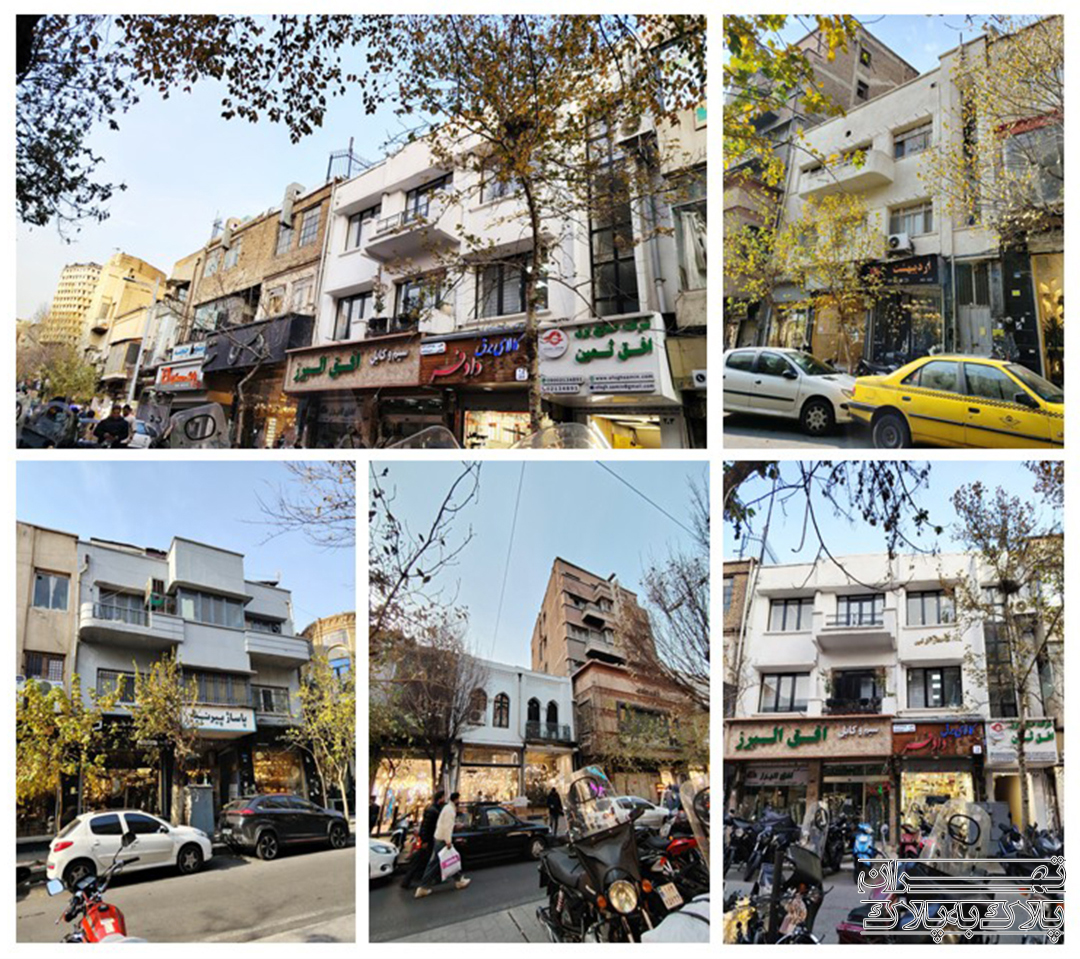
Renovated façades on Lalehzar and Lalehzar no after the start of South Lalehzar pedestrianization
“Nevertheless, the main question remains: what should be done with a cinema that has been closed for nearly 30 years? This is especially critical at a time when the film industry is facing serious challenges—from declining audiences and changing patterns of cultural consumption to the expansion of home‑streaming platforms and the emergence of small private screening venues, all of which have intensified the risk of the gradual disappearance of spaces known as ‘cinemas.’
Global experiences show that the revitalization of historic cinemas does not necessarily mean a simple return to the traditional function of film screening. Examples include:
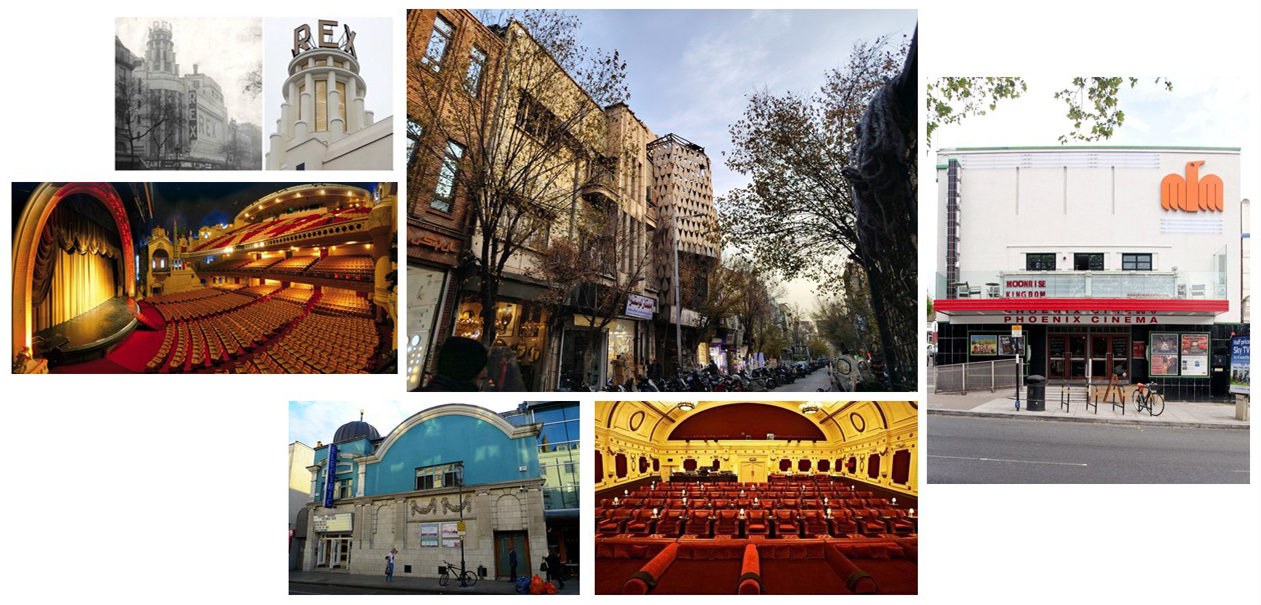
- Le Grand Rex (Paris): Preservation of the façade and historical identity, while hosting films, concerts, and urban events.
- Electric Cinema (London): A combination of film screening, café culture, and a distinctive cinematic experience.
- Babylon Kino (Berlin): The definition of diverse cultural functions, an active role in nightlife, and winner of the German Prize for Monument Protection in 2002.”
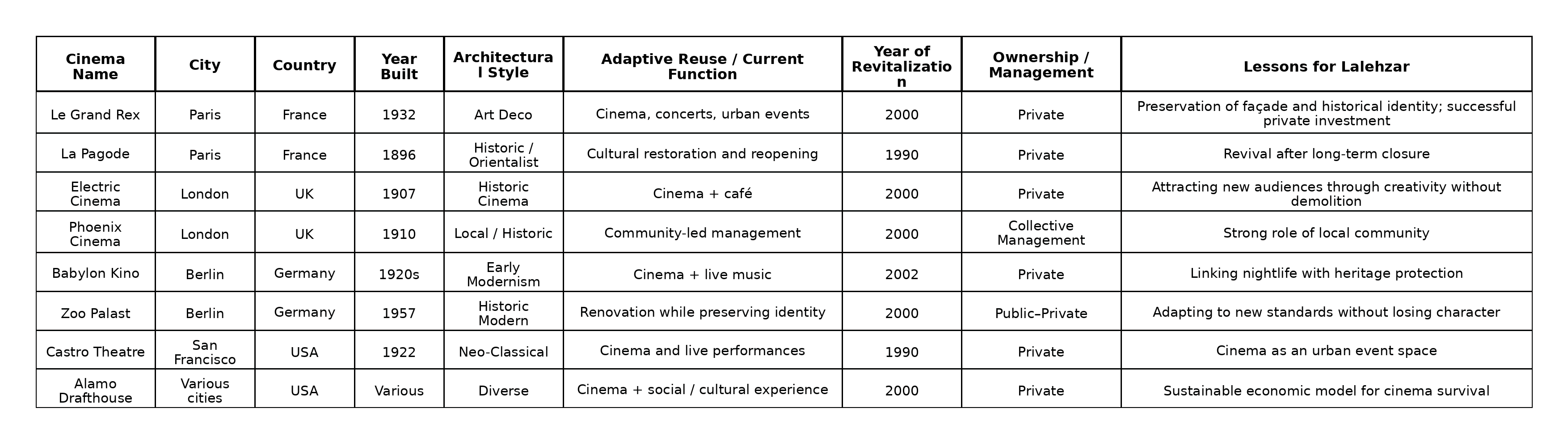
Successful Examples of Revitalized Cinemas Worldwide
A review of the presented case studies reveals a set of challenges that cinemas around the world appear to have experienced over time, particularly in relation to changing needs and the necessity of updating the cinematic experience. The years of construction of these buildings and the periods during which revitalization efforts were undertaken largely fall within a similar time frame. Another notable point concerns ownership, as the majority of these buildings have been revitalized through private-sector investment.
It appears that the most serious challenge in the conservation of heritage buildings is not the absence of models or precedents, but rather the lack of accessible documentation on successful economic programs for revitalized buildings, as well as the scarcity of critical assessments analyzing the failure of economic strategies in similar cases. A more profound issue, however, lies in the inability to move beyond emotional approaches and in institutional weaknesses that hinder effective dialogue among heritage authorities, property owners, and investors.
The revitalization of cinemas in Iran can only be achieved through expert-driven rational planning, institutional collaboration, facilitation by the Lalehzar Association, and the attraction of private investment. Emotional reactions and nostalgic rhetoric risk diverting buildings from a sustainable revitalization path and may, in fact, create conditions that further enable destruction.
Suggested Reading:
💬 نظرات کاربران
📝 افزودن نظر جدید