Nora Hosseini in Conversation with Alireza Mehyari and Shaghayegh Motavali
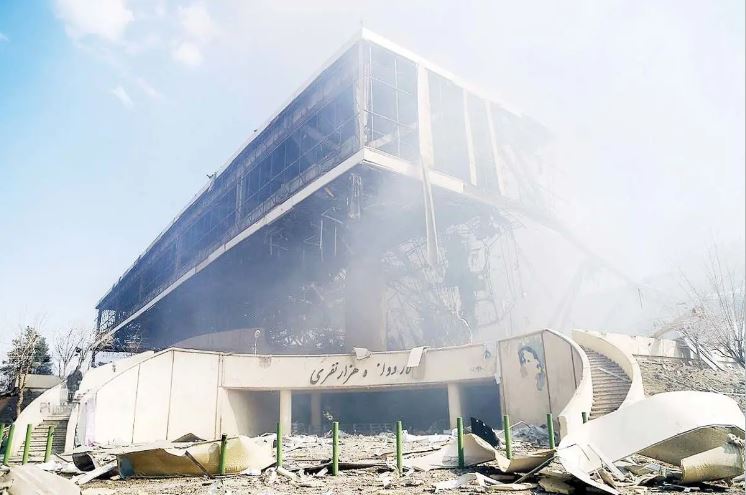
For many sports enthusiasts, the 12,000-seat hall at Tehran’s Azadi Sports Complex was never just a competition venue. It was a space where decades of sporting and social memories were formed. Designed by the architectural office of Abdolaziz Farmanfarmaian, the building nonetheless received limited attention in the history of contemporary Iranian architecture and remained largely overshadowed by the larger 100,000-seat Azadi Stadium. Now, following its demolition, new questions have emerged regarding its architectural value, urban memory, and the appropriate approach to rebuilding such structures.
Architects Shaghayegh Motavali and Alireza Mehyari, both focused on contemporary architecture in recent years, discuss the hall’s history, its position within modern Iranian architecture, and the challenges surrounding its fate. The paradox is clear: although the architect is widely recognized, the building itself remained insufficiently studied.
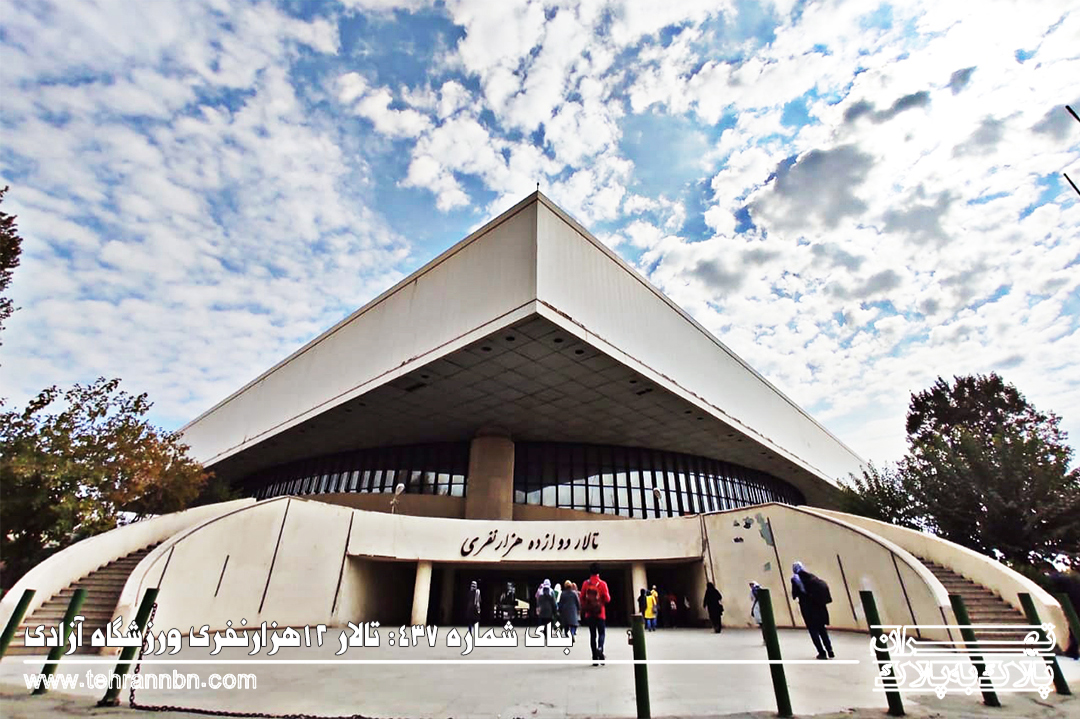
**Building No. 437 – Azadi 12,000-Seat Hall**
A Significant Architect, A Neglected Building
Research into the history of the 12,000-seat hall reveals surprisingly limited documentation. Despite being designed by Farmanfarmaian’s office—an influential force in shaping professional architectural practice and large-scale consultancy in Iran—the hall remained in the shadow of the main stadium.
Motavali notes that the most detailed references to the firm appear in issue No. 15 of Memar Magazine, which outlines the office’s members and professional trajectory. Farmanfarmaian, a graduate of the École des Beaux-Arts in Paris, collaborated with prominent architects such as Houshang Seyhoun and was active during a formative period in Iranian architectural education and practice.
The Azadi complex itself expanded significantly in preparation for the 1972 Asian Games, becoming more than a single stadium. Pools, halls, and various sports facilities were added, incorporating international standards and, in some cases, foreign contractors. This period marked a decisive step toward aligning Iranian architecture with global modernist practices.
A Pure Example of Modernist Architecture
According to Motavali, the 12,000-seat hall represented one of the purest expressions of the International Style in Iran. Its volumetric clarity, monumental stairway entrance resembling a gateway, and innovative roof structure were technologically advanced for their time.
She emphasizes that modern architecture must be experienced spatially to be fully understood. Public tours organized in past years revealed how surprised many visitors were to discover the hall’s architectural quality and sophistication, especially considering it was built in the 1970s.
Yet beyond the building itself lies a broader issue: the absence of a comprehensive documentation system for contemporary architecture in Iran. Many significant structures have been lost without proper archival records, gradually erasing portions of the country’s urban identity.
Modern Architecture as Cultural Capital
Motavali argues that modern architecture should be recognized as part of Iran’s cultural heritage. In many countries, even 30-year-old buildings are considered worthy of preservation. In contrast, in Iran, buildings only a few decades old are often dismissed as obsolete.
She stresses that without official recognition of modern architecture as heritage, discussions on restoration guidelines and preservation frameworks cannot meaningfully advance.
Azadi: More Than a Sports Complex
Alireza Mehyari expands the discussion, emphasizing that the Azadi complex is not merely a sports facility but a repository of collective memory spanning nearly half a century. Wrestling matches, volleyball tournaments, celebrations, and public gatherings all contributed to its social significance.
Efforts were made in previous years to encourage broader public access and even develop structured visitor programs, similar to international examples such as FC Barcelona’s stadium tours. However, changing management priorities and limited institutional support prevented such initiatives from materializing.
Demolition and the Loss of Memory
With the hall’s destruction, Mehyari notes, what was lost was not only a building but a layered memory—both architectural and social. The hall embodied two dimensions: its physical design by a major modernist architect and the powerful oral histories formed within it.
He explains that restoration of modern architecture differs fundamentally from restoring historical monuments. Modern buildings are often function-driven, and contemporary rebuilding must accommodate updated safety standards, infrastructure, and functional requirements.
Reconstruction: Replica or Reinterpretation?
A central question remains: Should the hall be rebuilt exactly as it was, or should a contemporary reinterpretation be pursued?
Motavali expresses skepticism toward preserving ruins as symbols of destruction, arguing that reconstruction should not reinforce a narrative of irreversible loss. Instead, any rebuilding effort should be grounded in thorough professional studies.
Mehyari suggests that while an exact replica may not be feasible, key architectural elements—such as the monumental entrance stairs—could be incorporated into a new design that respects the original spirit of Farmanfarmaian’s work while meeting present-day standards.
The critical issue, he emphasizes, is who will lead the project. If entrusted to architects and consultants with deep knowledge of modern Iranian architecture, the reconstruction could both meet functional needs and preserve the complex’s architectural identity. If handled superficially, however, the result may lack coherence and cultural value.
Beyond Construction
The fate of the 12,000-seat Azadi Hall is no longer simply a matter of construction. It represents a broader reflection on how Iran engages with its modern architectural heritage and urban memory.
The key question remains:
Will reconstruction focus merely on building a new hall, or will it become an opportunity to reassess and reclaim the legacy of modern architecture in Iran?
Published on Shargh Daily March 8, 2026 (18 Esfand 1404)
💬 نظرات کاربران
📝 افزودن نظر جدید