shafagh motevalli
“Cities are made of these small fragments and pieces.”
Jane Jacobs
.jpg)
Armenian Club Entrance 2024
.jpg)
Armenian Club Entrance 2017
After the filling of the Nasseri Moat and as urban growth in Tehran began to move in step with global transformations, our Tehran emerged as a city whose people demanded modernity.
Tehran of the 1930s, as cited by Dr. Seyed Mohsen Habibi, stands as a symbol of the Iranian modernist city—a city that advances alongside its people in the present time, bearing the marks and imprints of its era upon its physical form through a fusion of reality and imagination.
To be modern is to be aware of one’s time.
A modern city continuously demolishes and regenerates itself; through this process, it preserves a labyrinth of memories belonging to different generations, shaping history and identity. This history contains countless micro‑histories of everyday urban life and is rich in documentation that can contribute significantly to understanding the city and its related disciplines.
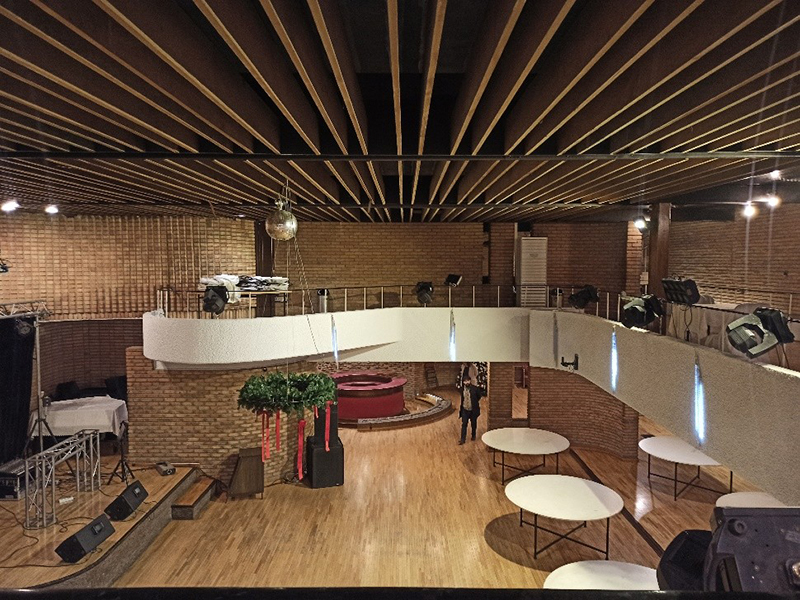
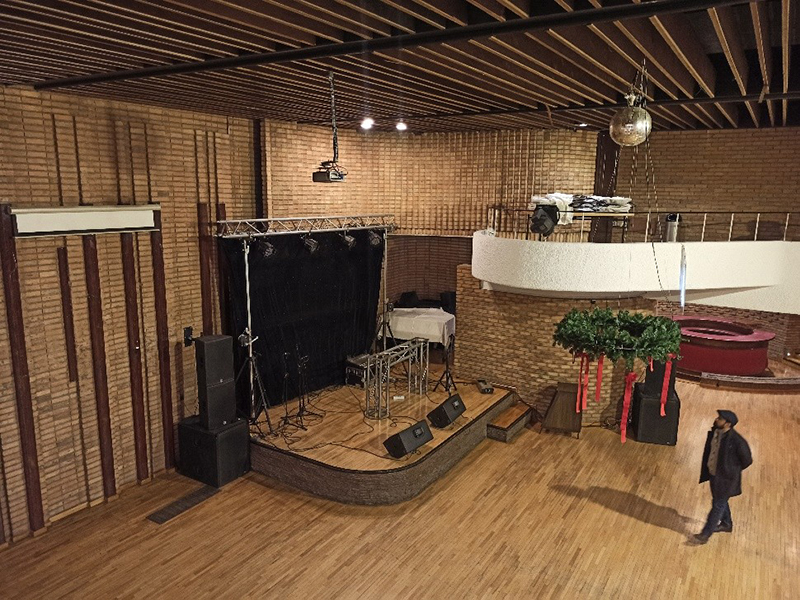
hall 2024
William Shakespeare famously wrote:
“؟What is the city but the people within it”
Yet today’s Tehran, rather than being a modern city proud of its layered labyrinths, has come to resemble a vast construction site—one that consumes its own children.
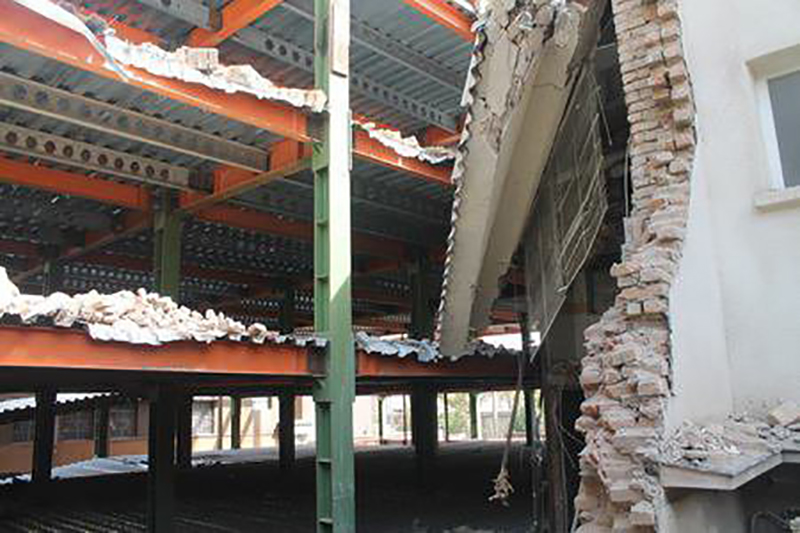
Damage caused by improper excavation
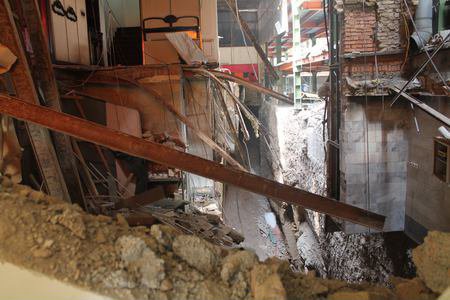
Damage caused by improper excavation
The Collapse of the Armenian Club
The Armenian Club, designed by Architect Rostom Voskanian and located on Nofel Loshato Street, collapsed due to improper excavation. News of this incident can be found at the link provided.
This event is significant from several perspectives.
First, Armenian architects have played an undeniable role in shaping Iran’s contemporary architecture. One of the most defining characteristics that distinguishes them from later generations is their deep awareness of and respect for Iran’s architectural heritage, as well as their seriousness in establishing and constructing buildings that formed a solid foundation for modernity within Iranian society.
For this reason, as the concept of “modern architectural heritage” gains recognition at the global level, we bear a responsibility to engage with this legacy more seriously. Given that Iran is now a member of the international organization for the protection of modern architectural heritage—and that its office is currently based at the University of Tehran—it is expected that a more active role be taken in identifying these buildings and proposing practical strategies for their protection.
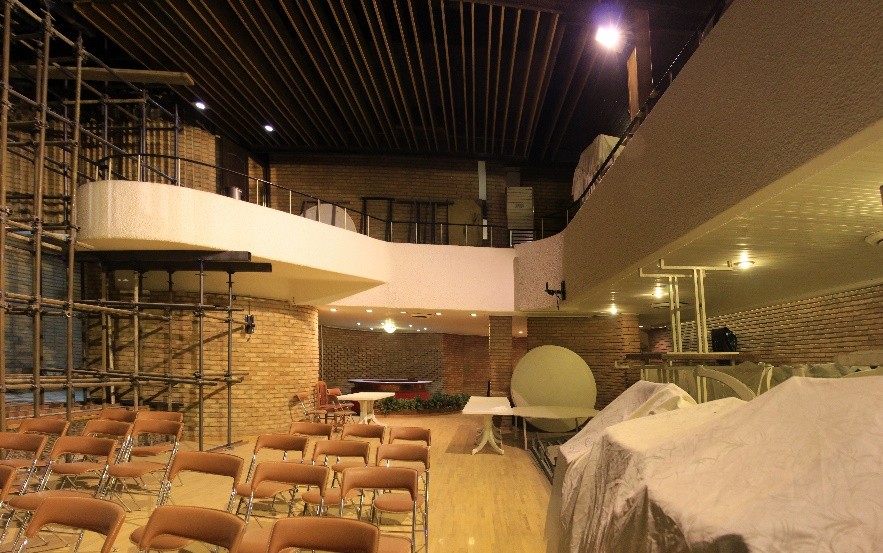
2017
Architectural Value of the Armenian Club
Beyond serving as an important social and cultural venue for Tehran’s Armenian community, the Armenian Club is also significant in terms of its architectural design.
Constructed in 1966, the building faced both public and professional opposition due to its unconventional approach to land use and spatial organization.
In this design, Voskanian preserved the courtyard and green space to the greatest possible extent, placing the main hall entirely underground in an introverted layout, with a separate entrance from Rue de France. Upon entering the building, the refined and artistic use of brickwork and white cement—materials characteristic of construction in that era—left a profound emotional impression.
It has been said of this building:
“From the outside, it gives no indication that it contains a large hall inside—one used both for weddings and for events such as commemorations and lectures. Like traditional Iranian houses (such as the Borujerdi House), it seems to have an exterior and an interior; from the outside, nothing of its inner world is visible. This itself reflects the wall that separates the small Armenian community from the larger society.”
The spaces within the building were designed specifically in response to the cultural and ceremonial needs of the Armenian community—needs that, under the current circumstances, can no longer be met until restoration is undertaken.
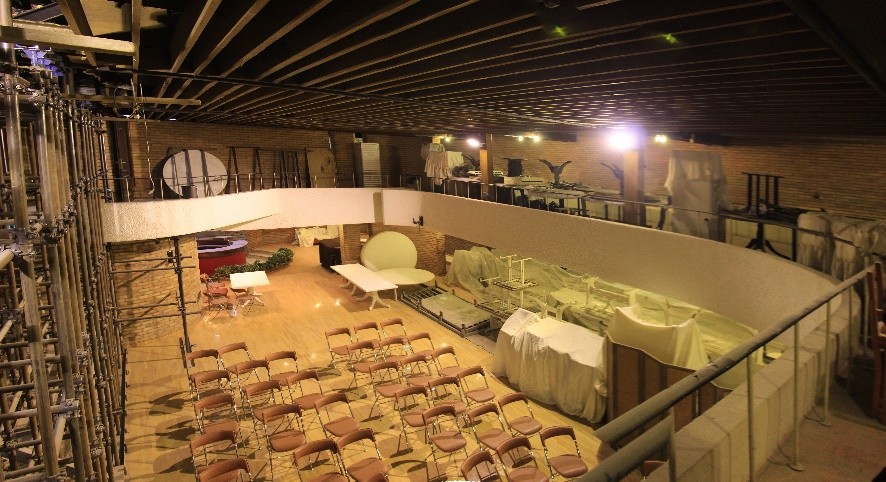
2017
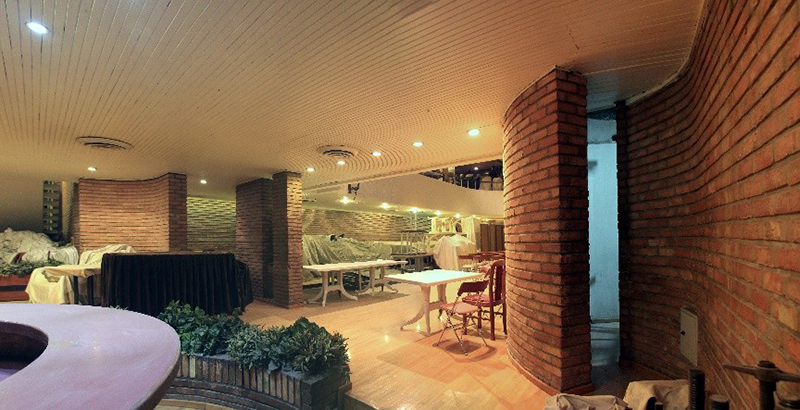
2024
A Broader Responsibility
Another critical issue highlighted by this incident is the urgent need to reassess construction supervision and oversight. Safety and precision in execution are not optional; they constitute a fundamental human responsibility in the building process.
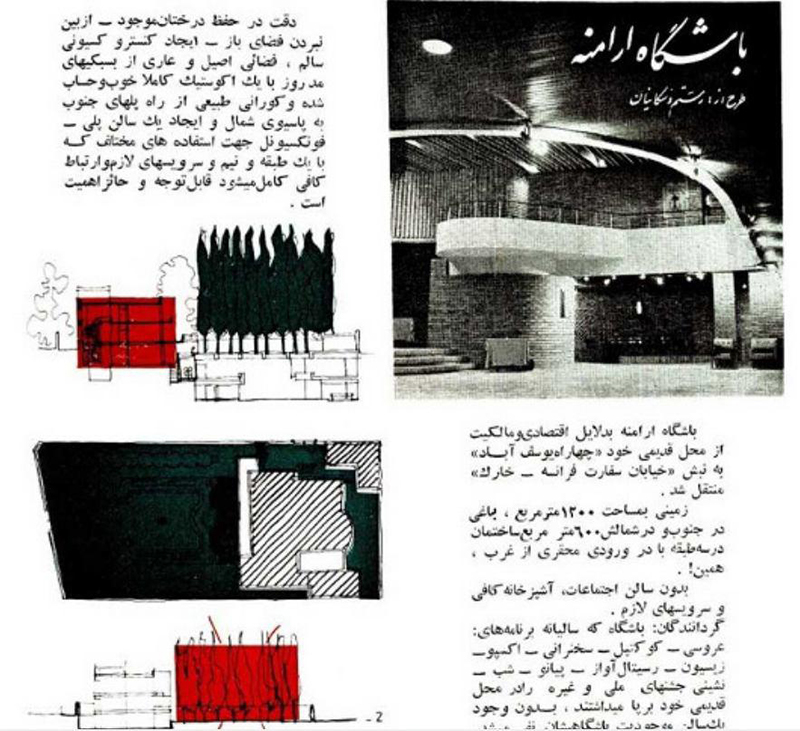
Art and Architecture Magazine
Whether a structure is of historical significance or simply the home of a family, no building should be harmed in the name of development.
The registration dossier for this building was prepared in 2023 by the Tehran, Number By Number Parcel Research Group. Despite extensive follow‑ups, it has yet to be officially registered due to resistance within the Tehran Office of Architectural Heritage toward modern architectural heritage. Efforts to secure its registration are ongoing.
All images of the building (excluding those taken after the collapse) are from the archive of the Tehran, Parcel by Parcel Research Group.
Additional information about this building has been published in Memar Magazine, Issue 102, and Honar‑e Me’mari Magazine, Issues 6–7 (1970).
This note was first published in 2017, following the destruction of the building, on the Tehran, Parcel by Parcel website.
💬 نظرات کاربران
📝 افزودن نظر جدید