Challenges and Proposals for Protecting Tehran’s Architectural Heritage
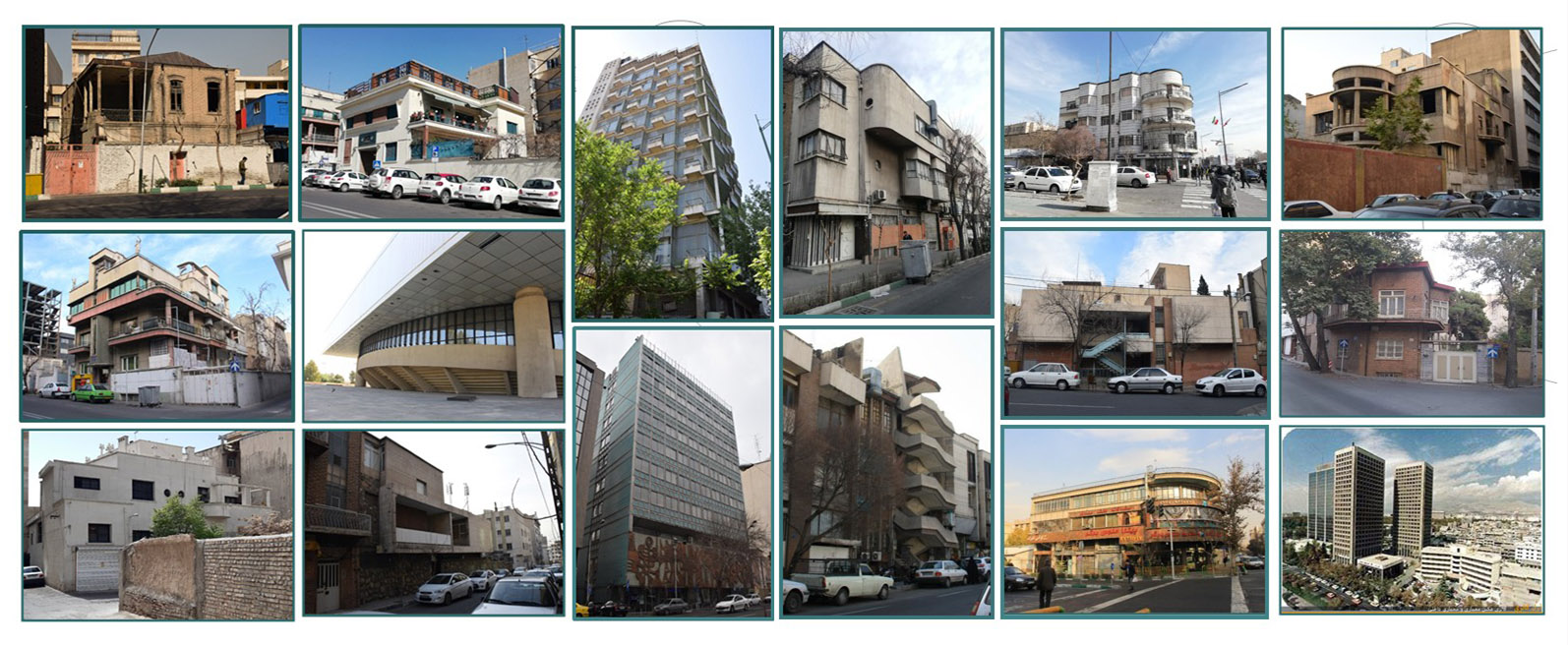
Tehran is a city shaped by multiple layers of modern Iranian history, from historic urban fabrics to significant examples of twentieth‑century modern architecture. Yet in recent years, a considerable part of this urban heritage has faced threats ranging from demolition and abandonment to poorly considered interventions. Years of field research and documentation of Tehran’s urban landscape suggest that safeguarding this heritage requires coordinated managerial, legal, and cultural measures.
One important issue is the lack of clear governance structures for some major historic buildings in the city. The historic Baladieh (Municipality) Building, for example, could function as an open civic and cultural space through a management model similar to that of the Iranian Artists Forum. Such an approach would allow urban initiatives and cultural activities to take place while preventing arbitrary decisions about spaces that belong to the city and its citizens.
Another priority is the continuation of systematic projects for identifying and monitoring valuable buildings across Tehran. Although many significant buildings have already been documented, this process needs to continue in order to create a more accurate and comprehensive understanding of the city’s architectural heritage.
A large portion of Tehran’s modern architectural heritage is also at risk, particularly buildings under public ownership that have been left unused for years. Many of these structures could be revitalized through appropriate planning and investment, potentially gaining new cultural or public uses. At the same time, the absence of clear guidelines for the conservation and adaptive reuse of modern architecture has led to interventions that damage the original character of these buildings—such as inappropriate façade alterations or construction that disrupts their architectural integrity.
In recent years, the demolition of valuable buildings without any subsequent development has also become a serious urban problem. In such cases, not only is an important piece of architectural history lost, but the resulting vacant lots often become neglected urban spaces. With the right institutional frameworks and investment mechanisms, many of these sites could instead have become successful examples of urban regeneration.
Tehran would also benefit from the creation of a comprehensive and dynamic database of its buildings. Such a platform could document not only protected or historic structures but also the broader building stock of the city, enabling future researchers and urban planners to study the evolution of Tehran’s architecture and urban development.
Frequent changes to street names present another challenge. Beyond causing confusion for residents and visitors, these changes gradually weaken the city’s collective memory. They also complicate the archival documentation of urban research, as addresses and place names continually shift over time.
Alongside these issues, several measures could significantly improve the protection of Tehran’s architectural heritage: facilitating investment in historic buildings, establishing stronger networks among urban researchers and heritage professionals, improving public communication about historic districts, and ensuring that heritage specialists participate in architectural and urban planning decision‑making processes.
Ultimately, Tehran needs a comprehensive approach to its historic urban fabric—one that recognizes not only individual buildings but also historic streetscapes, significant urban areas, and the diversity of architectural periods, from traditional to modern. Such an approach should also address broader urban concerns, including mobility, public services, urban economy, and the quality of everyday life in the city.
Given the rapid pace of construction in recent years, along with challenges such as shortages of public services and green space, traffic congestion, energy management, and land subsidence, reconsidering the scale of urban development in Tehran has become increasingly urgent. Protecting the city’s architectural heritage should therefore be understood as part of a broader effort to sustain the livability and resilience of Tehran for the future.
💬 نظرات کاربران
📝 افزودن نظر جدید