Tehran’s Contemporary Architectural Heritage: From Structural Vulnerability to Post-Crisis Urgent Preservation
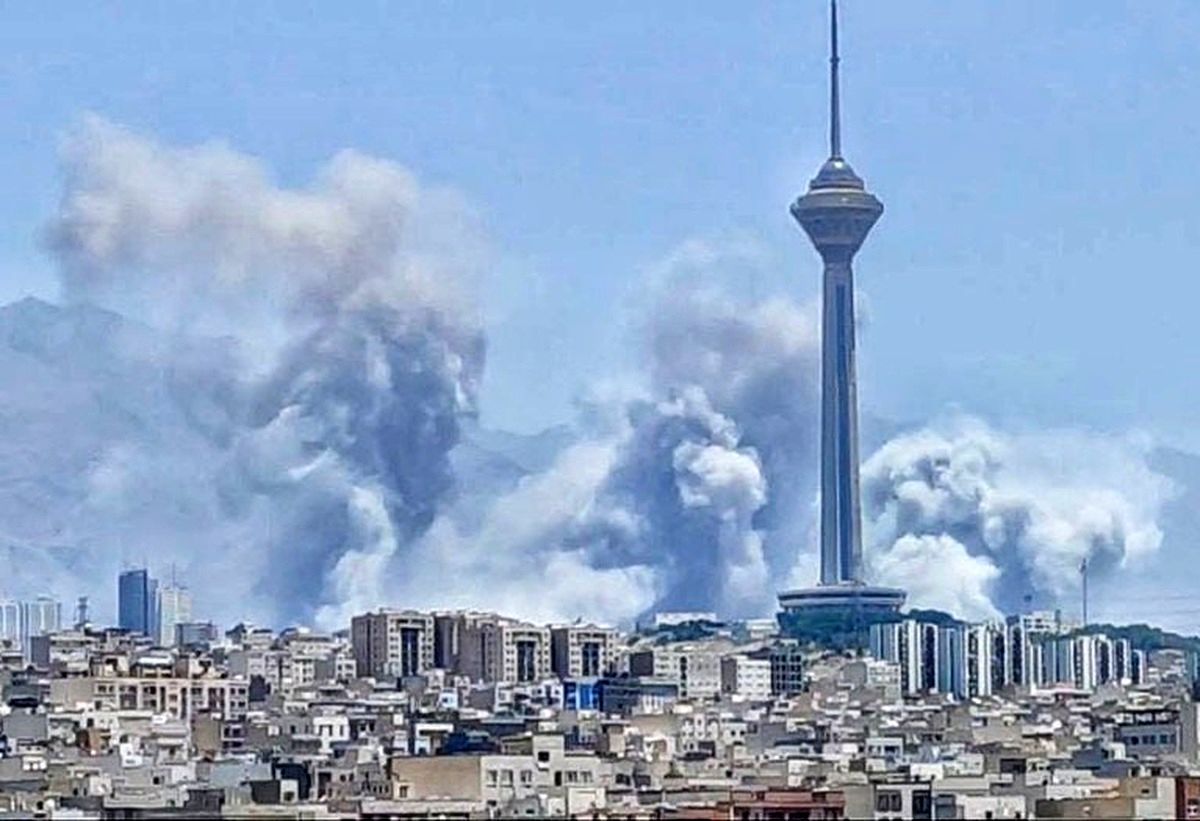
The recent war and the damage inflicted on cities have once again triggered a race among media outlets and various institutions to provide up‑to‑date and exclusive reports about the destruction. Riding the wave of crisis to demonstrate concern has become a familiar pattern over roughly the past decade.
Yet urban heritage requires action beyond mere information sharing. In recent years, structural demands for documenting the history of the city have repeatedly been raised, but unfortunately they have often been dismissed or trivialized by officials. Had these matters been taken seriously when the opportunity existed, our urban heritage would likely have suffered far less harm than the city’s administrative institutions, and the city itself might have gained more valuable experiences.
The simple story of Police Station No. 109 and the adjacent building is a small example of the damage caused by poor judgment on the part of managers and by the many things left undone in previous years. One hopes that in the coming years there will be a stronger determination to listen to the needs of documenting the city’s history and to take the necessary actions to support it.
Recent crises have once again turned the spotlight on the state of contemporary architectural heritage in Tehran. However, a precise understanding of the current situation cannot be achieved solely by focusing on the direct aftermath of the conflict. Even prior to these recent upheavals, Tehran’s modern architectural legacy was suffering from severe structural neglect due to the absence of a coherent support system. The recent events have not been the origin of this crisis, but rather a catalyst that has exposed pre-existing fissures in urban management and heritage preservation systems, highlighting the urgent need for immediate action.
Unlike many historical buildings whose value is primarily defined by their age and physical attributes, modern architectural heritage derives a significant portion of its value from its connection to urban life, its role in shaping collective memory, and its organic relationship with the city’s fabric. Consequently, any hasty intervention in damaged buildings could lead to the irreparable loss of this heritage.
In recent weeks, the rapid pace of debris removal—often conducted without meticulous documentation—has raised serious concerns. In such circumstances, the final opportunities to record the current state of these structures prior to any intervention are being lost, and buildings are undergoing alteration or demolition without a precise technical or historical dossier. A prime example of this is the Baharestan Police Station, designed by Vartan Hovanessian; during the debris removal process, an adjacent building by the same architect, which was relatively intact, was demolished along with the damaged sections.
The “Number by Number” (Tehran Property by Property) research group, which has been monitoring and documenting Tehran’s architecture for over 15 years, has identified 178 buildings damaged during the “Ramadan War” in its preliminary assessments. While this list is an initial dataset requiring field verification and further expert analysis, it provides a comprehensive overview of the extent of the damage and the necessity for integrated management planning.
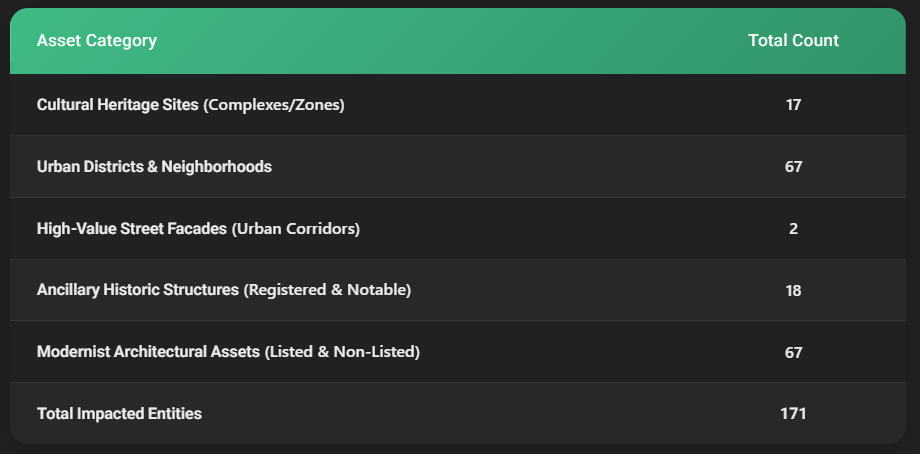
Preliminary Inventory of Damaged Urban Assets
Table 1 – Preliminary List of Buildings Damaged During the Ramadan War
In these circumstances, transitioning from reactionary and emotional responses toward structural policymaking for the preservation of contemporary architectural heritage is of paramount importance. To this end, six fundamental pillars can be proposed as prerequisites for safeguarding this aspect of Tehran’s urban identity:
- Formation of a Specialized Task Force: To accurately identify and document damaged buildings through field inspections and the creation of technical dossiers, facilitating informed decision-making regarding restoration, structural reinforcement, or—where necessary—demolition.
- Harmonized Policy-making and Institutional Coordination: Establishing synergy between urban management and the Ministry of Cultural Heritage. Past experiences, such as the demolition of the Hotel Residence designed by Heydar Ghiai, serve as a reminder that a lack of unified procedure among responsible institutions leads to the loss of invaluable assets.
- Establishment of a Dynamic Database: Creating an integrated system for the registration and documentation of Tehran’s buildings. Such a system would consolidate scattered data and provide a clearer picture for studying the evolution of the city’s architecture.
- Determining the Status of Abandoned Public Assets: Addressing the fate of significant properties that have been left to decay for years, such as the Metropol Cinema, Villa Siasi, Radio City Cinema, the Mostafa Adl House, and the Mirdamadi House, ensuring they are reintegrated into the cycle of urban life.
- Standardizing Urban Street Renaming: Halting the frequent renaming of streets and alleys, which not only confuses citizens but also weakens the city’s collective memory and hinders urban research and documentation.
- Standardizing Urban Renewal Processes: In cases where buildings lack historical or architectural value and reconstruction is inevitable, it is essential to adhere to standards of structural resilience, energy efficiency, and safety to ensure that urban redevelopment aligns with Tehran’s future needs.
Tehran’s contemporary architectural heritage is not merely a collection of buildings; it is a vital part of the city’s memory and identity. Safeguarding this heritage is not a decorative gesture but a necessity for maintaining the city’s connection with its modern history and strengthening its cultural resilience against crises. Every decision made regarding these structures today will leave a long-lasting impact on the face and memory of Tehran.
This document was submitted as an official letter to the Tehran City Council on June 8, 2026, as a formal demand for the protection of urban rights.
💬 نظرات کاربران
📝 افزودن نظر جدید